
It’s 2025. You’re staring at a differential equation, it’s staring back, and neither of you is blinking. What happens next? Maybe you pull out a calculator. Maybe you cry. Or—maybe—you open an AI math solver app, point your camera, and poof—the solution appears like digital sorcery.
But is it really that simple? Yes, an AI math solver really doesn’t require much knowledge or effort. For example, take the AI Math Problem Solver, which can solve any math problem from a photo. Is a math problem solver a panacea? In a sense, a math solver really can be the solution to all difficulties with numbers, but the ability to manipulate values is still a relevant skill in 2025. The question is rather about how to prevent help from turning into an addiction, and this is worth considering.
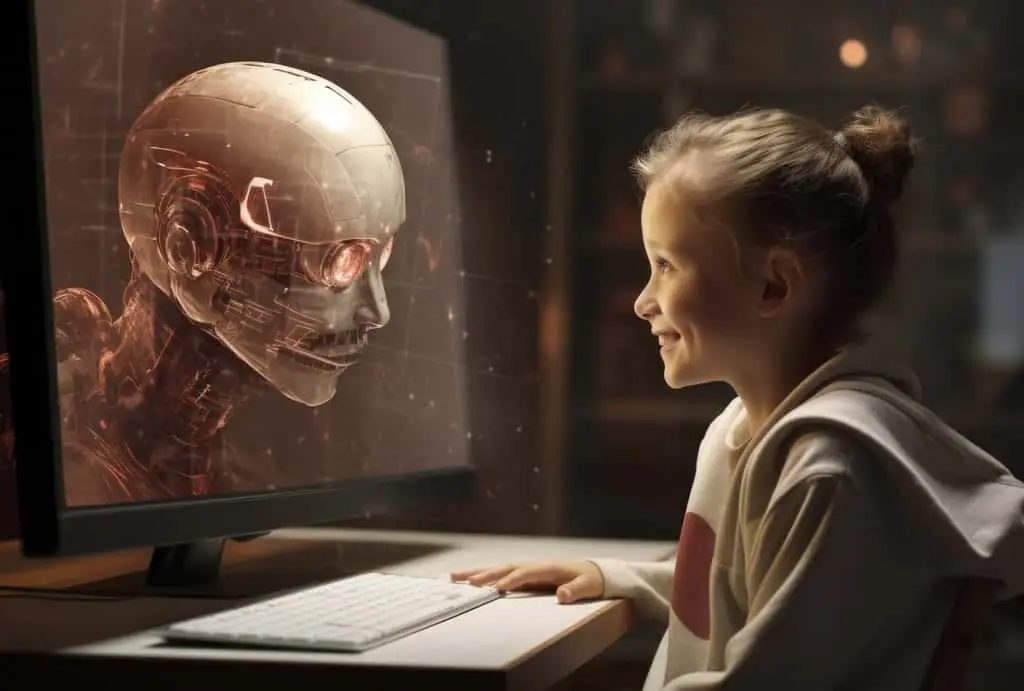
PRO: Instant Solutions Save Time (and Stress)
Here’s the magic: put in the problem, get out the answer.
That’s it. No elaborate rituals. No hours of struggling to grasp difficult steps.
AI math solvers give you not just answers but also step-by-step breakdowns. Which is to say they’re not just calculators — they’re tutors in disguise. Time saved? Think about this: a standard 2-hour calculus homework set should be able to be divided in half with AI help.
CON: False Confidence from Flawed Outputs
While most services use fairly complex and flexible learning algorithms to produce correct results, this is not always the case. The problem is not only that the problem solvers themselves can make mistakes, people could make mistakes when composing a formula or entering numbers. Incorrect interpretation of brackets, difficult to recognize handwriting, or an incorrectly entered variable puts the result at risk.
PRO: Encourages Exploration and Curiosity (When Used Right)
Surprise, surprise, AI math solvers indeed lead to better comprehension if employed purposely. A curious student may use the same problem in two solvers to compare methods. They could try out variations: What if I change the coefficient? What if I make it a limit? All at once, the app isn’t solving, but igniting inquiry.
The trick? Intention. As with any instrument, it is not the metal that possesses value but the wielder. Trying not to make out the AI math solver as the glass, but someone must look through it.

PRO: Accessibility and Personalized Help
We all have to admit that there is no one-size-fits-all approach to education, especially mathematics. Difficulties are part of the journey, whether it’s a language barrier, a person’s physical abilities, or even accessibility issues. A good teacher can significantly mitigate these difficulties and find a way to overcome them. But are all teachers truly professionals?
AI does not judge. It does not sigh when you ask the same question five times. It also does not take vacations and is available even at 3 a.m. It will not hide in the school toilet during a trip. AI can explain a problem or an answer in more depth and from different perspectives. Not all teachers are interested in this.
So, for a dyslexic student battling word problems or a Ukrainian teen learning algebra in English, the AI does much more than just provide a short cut. It becomes a bridge.
CON: Ethical and Academic Integrity Questions
The line between help and cheating has never been blurrier. Using a math problem solver to solve a home test? Acceptable, but worrisome. What if some use AI while others learn on their own? This could create knowledge gaps between students. The rules of the game are pretty blurry, and we need to acknowledge that.
Universities are just starting to regulate these issues. Some consider “unauthorized AI assistance” a violation of the rules. Others set traps so that only a human can notice some nuance in the problem. A simple example is solving a problem only in a certain way or without using an algorithm. But a significant number of universities are simply wary of math problem solvers, not prohibiting their use.

The Human + Machine Equation
In summary, problem solving technologies have made a huge step forward. AI gives real and usually accurate results. This is a time saver for students, engineers and other people who often use mathematics. If a person rarely encounters problems with numbers, then such a solver will also come in handy, because an untrained person is unlikely to be able to solve a problem right away.
Is it ideal? Almost, but the human nature of making everything easier and uncontrolled use make their own adjustments. To avoid overdependence, misinformation and ethical ambiguity, responsible use of technology is what we should focus on.
Maybe that’s the real equation here:
(AI Tool) + (Human Intention) = (Smart Learning)
The efficiency of machines combined with the flexibility of the human mind give the best result. All algorithms can have vulnerabilities and sharp corners, and it is precisely these that the human mind connects.